Driveway Woes, Too Much Literature, and Moving Along
In my mind, yes, defensive writing (and research) intersects with car alarm malfunctions
It began on a Monday. The alarm system on our car started going off at random times (3 am…) with its dashboard lights blinking a chaotic Morse Code. Remember Stephen King’s novel Christine, the one with a supernaturally possessed car? The incident was like that but without the murders. Thank goodness none of our neighbors complained.
After two nights of inadequate sleep (anticipating the car alarm going off and also wondering if was going to implode in the driveway altogether) and a wrench ready to disconnect the battery, a call to our service mechanic yielded “sure, it’s probably safe to drive!” So we brought it in. The diagnosis was too costly for such an old vehicle. We parted ways. In its place now is a new-to-us vehicle. It’s wonderfully quiet. Safer, and more comfortable. That same night I slept for 10 hours straight.
I’m not turning this into a newsletter about cars (sorry, auto enthusiasts) but there’s something about this event that put me into self-protection mode. It’s that twisting up of fear, probabilities, and not knowing the next best step (because, well, Christine had taken up residence in our driveway).
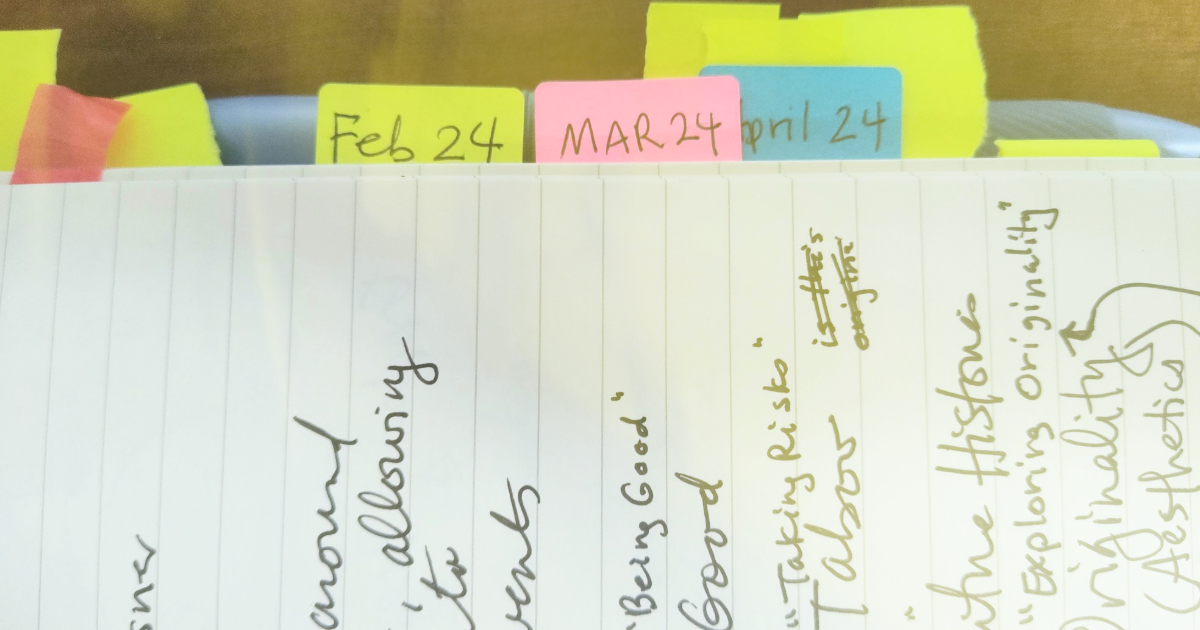
Before all this happened, I reviewed some older pages in my writing journal. There was this bit that I’d underlined: Avoid writing from a defensive place.
The car dilemma and this statement are not related whatsoever, though they are now mushing together in my head. There’s something about writing defensively — a self-protective act — that is widespread (and often expected) in academia. It probably happens in other industries, too. The end of a semester is a season of defenses: thesis and dissertation oral exams, as well as final projects, presentations, and papers. We anticipate students will demonstrate what they did, and also how and why they did it; this is how we evaluate how much they have learned and progressed. We do it to ourselves and our peers, too. To defend our decisions continually through manuscripts, proposals, and lectures can put us on guard, knowing that this becomes a strong component in how our work is perceived (and validated) by colleagues.
A few pages later, in my writing journal, I scribbled this: At what point can we just do the work without defending it? (Rather anti-academic, right?)
I’m thinking about this more and more while digging into some newish design theory. Rather than get tangled up in specifics, I’ll simply refer to this here as Clever-Theory. Its newness (to me) is exciting, but also throws me back into novice territory. What if I understand this all the wrong way? What if I can’t learn quickly enough, using my middle-aged brain?
At that point, my voice of reason kicks in (also known as, what I’d tell my students if they said this to me). In our corner of the design discipline, there’s not so much a ‘wrong way’ but rather a ‘different way’. Every situation is different. But we also need to be able to substantiate our decisions and methods.
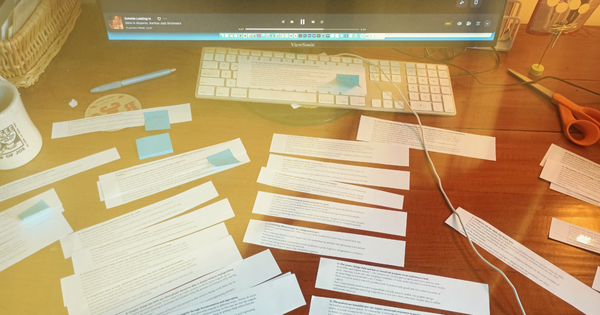
And yet, here I am, still pondering my earlier question. I arranged all the parts to thoroughly understand Clever-Theory by making the following:
- a spreadsheet to keep track of various articles (full text ready to go) and websites (bookmarked)
- a realistic schedule for reading and note-taking
- a fresh paper notepad for scribbling out thoughts
- a text doc for all the proper notes
(FYI: This turned out to be a really productive setup and if you’re interested in learning more, please do let me know, as I may focus on that in a future newsletter)
I did all the things that come with doing a thorough review of existing literature and media. Halfway through, it felt too tedious, then boredom set in, and after that was resentment.
Yes, you read those right: boredom and resentment.
Still inspired by the material, I had this nagging feeling that I was going to have to defend it. Couldn’t I just read a few bits about Clever-Theory and be done with it, and just go ahead and *use* it? Do I really need to worry that one day I’ll have to defend why I chose that particular path? Will anyone realize that I nearly half-assed this stuff and then conjured up my own version of it?
Turns out my efforts were not wasted. Later on, it struck me that even with all the frustration, the words and ideas I read about Clever-Theory were sticking around in my mind. They’re ready to be used, and dare I suggest, even contested (gasp! YES!)
That’s the thing about time and events — from Christine malfunctioning in the driveway to eyeball-rolling literature reviews — things move along at their own unexpected pace, and perhaps the thing to do is just move along with them.