Fellowing
Parallel work becomes unexpected community
This morning I’m out watering my garden before the day gets too hot (hello, heatwave), and across the street, Len is in his garage with the door up, tinkering with what looks like an old bicycle. I’m not entirely sure what he’s doing (adjusting derailleurs, maybe, or just gaining the satisfaction of cleaning the chain) but there’s something oddly comforting about it. We’re working on our respective things at the same time, in separate spaces, yet somehow together in this quiet morning ritual.
I call this fellowing (not following). It’s that sense of camaraderie that emerges when you’re doing your work alongside others doing theirs, even when the work itself is completely different.
My first vivid experience of fellowing happened during the summer of 2020. That was quite a time… the pandemic in full swing, protests across the country, everything feeling urgent and stuck at the same time. In the middle of all that, I joined a writing group started by a few scholars in Canada. Every Monday around 11am (or maybe it was noon), we’d gather on Zoom to write. The rules were simple: show up, turn on your camera, and write for an hour. No talking. No reviewing each other’s drafts. No pressure to share anything. Just the steady presence of other people also getting words from their head to page. I was sad when those gatherings ended. There was something about it that anchored the week in the midst of uncertainty.
These days, I’m in a couple different writing groups. One operates like those original “shut-up-and-write” sessions in 2020. In this group, there are sometimes new faces and often the regulars who’ve become familiar over time. The other is smaller — just four of us who’ve given ourselves an amusing nickname — and we change things up. We’ll do focused writing sessions or round-robin check-ins where we talk through what we’re working on, what’s challenging us, what feedback we need. And of course, it’s the people who make the groups worth doing.
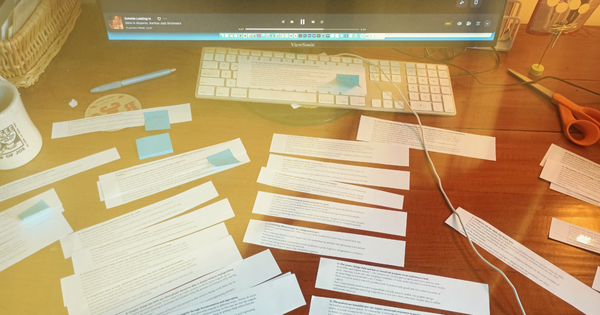
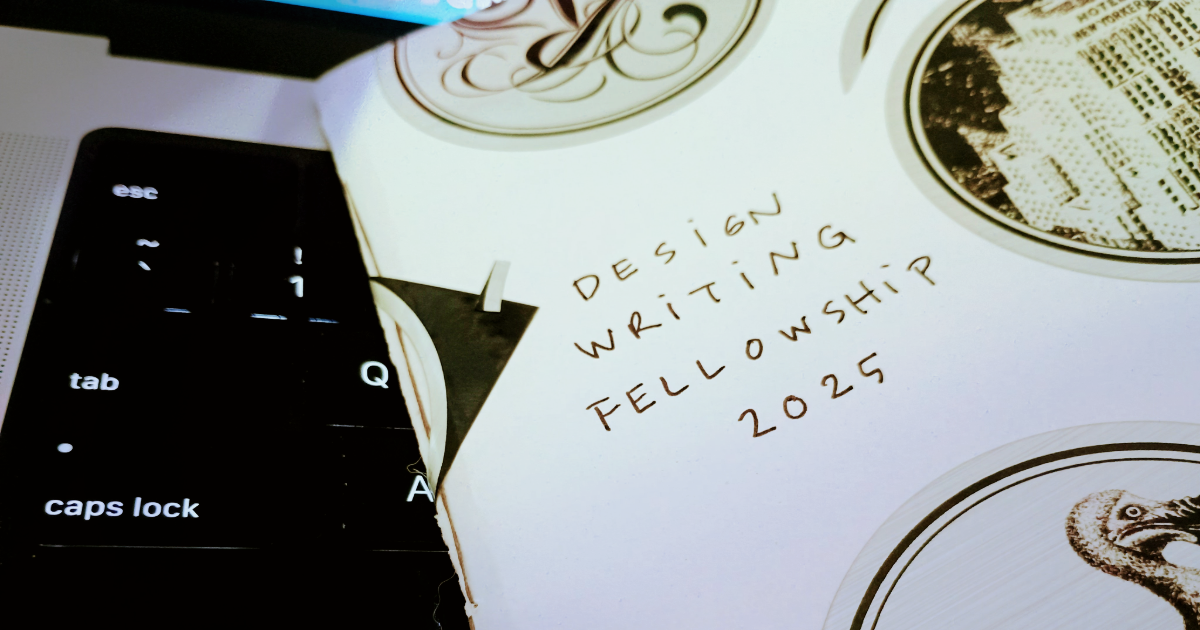
Recently, fellowing has been popping up elsewhere in my bookish life. At the end of May, I participated in a three-day Design Writing Fellowship. I happened to be pretty sick with an upper respiratory infection at the time, and thankfully the fellowship was virtual. So, I spent much of it with my microphone muted, sniffling my way through and indulging in a new food group of tea and cough drops. In a journal that I made from stuff already on my desk (see photo above) I documented every conversation, working session, and mentoring moment because I didn’t trust my congested head to hold onto it.
Empowering is the best word I can find to describe my fellowship experience. I was in the Books track, and I realized that what had been frustrating me for years was this: a stubborn attachment to a concept that simply didn’t have the legs to carry the book project as far as I wanted to go. This was a valuable realization. Sometimes you need the presence of others doing their own hard thinking to recognize when it’s time to let go of something that isn’t working and embrace what wants to emerge instead. This fellowing surprised me with the confidence to reframe everything. I’ve spent the past week developing new chapter summaries and mapping out a different arc entirely. (More on that in a future newsletter!)
And just last week, I co-facilitated our first-ever Academic Abstract Writing Workshop for Design Incubation, the organization I co-chair. My colleagues and I probably over-planned (at least two, maybe three planning sessions to sort through presentations, breakout groups, the works). We had seven brave participants. It felt wonderful to be with like-minded people talking through their writing challenges.
Maybe that’s what I appreciate most about fellowing: it’s not about collaboration in the traditional sense, where we’re working toward the same outcome. It’s about the quiet solidarity of parallel effort. Len with his bikes, me with my peppers. We’re writers with our separate documents open and researchers in a workshop, digging into our own questions. We’re all out here trying to make something, fix something, figure it out, and sometimes the best support we can offer each other is simply showing up to do our work in the presence of others doing theirs.
As always, thanks for reading.