Learning the Flexibilities of Structure
Rethinking structure — instead of eating chocolate — can help a stalled writing project
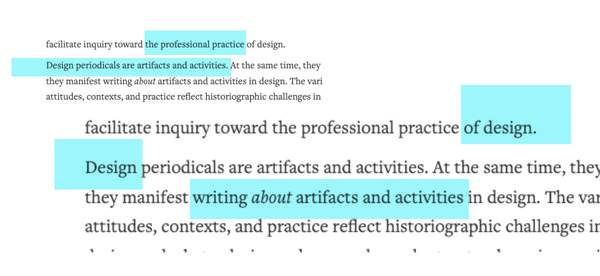
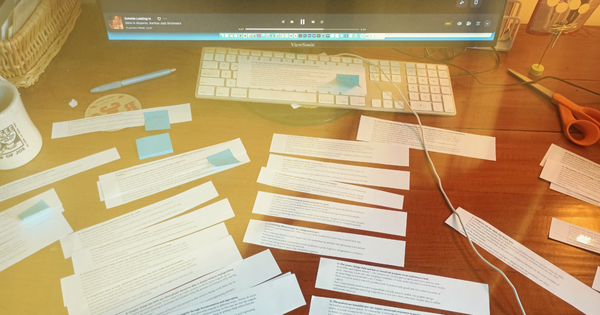
As I prepared this essay, I tore apart disassembled my half-a**ed outline working table of contents for my stuck in-progress book proposal. Then, looking at all the bits and lines (and castaways of text…) floating around my screen, I sighed and slowly started to stitch the parts back together again.
Everything shifted… and the structure that had been settled in my mind for months was no longer there.
Perhaps not surprisingly, this intervention followed a weekend phone chat with a friend about being stuck (that resulted in her recommendation to read Elizabeth Gilbert’s Big Magic, which was quite helpful, and also coincided with this recent essay by Helen Redfern). Shortly thereafter, I had email exchange with another friend about the pathetic incomplete state of the book proposal.
As I rearranged the various parts, I realized that these problems had little to do with my concept, and instead had everything to do with its structure. I’d tried to cram too many things into lengthy chapters and it was causing me quite a lot of anxiety and worrying too much about word count (which led to even more distracted chocolate consumption). The organization wasn’t supporting the ideas.
By the way — in using the term ‘structure’ I refer to strategy and organization (unique to each writing project), not any sort of formulaic short-cut (of which there are plenty).
Structure is already part of graphic design theory in the form of grids, composition, layout principles, and hierarchies. Though perspectives on what these look like may vary, foundational structures form a cornerstone of design studio education. Writing design can benefit from this mindset, too. Instead of spatial arrangements of type and image, though, it’s about wrangling designing with the contents of linear text.
Though I’ve written many articles and essays, books require a different approach. Complicating this curve is that my project is creative non-fiction, and I have few scholarly models (in my discipline) to draw from. Over the past few weeks, I’m paying more attention to the ways this could be structured so that all its working parts make sense — and invite writing rather than foster anxiety… and more chocolate.
My lengthy chapters have become sections, and the parts within those have morphed into chapters. Each chapter will, hopefully, be more focused, each with its own arc.
I found these two resources to be helpful, specifically for considering structure:
- Secrets of Structure (video) by Helen Sword and Margy Thomas. Great video showing two different approaches to structuring large-scale writing projects.
- The Dissertation-to-Book Workbook (book and blog) by Katelyn E. Knox and Allison Van Deventer. This is useful even if you, like me, have an MFA and wrote a thesis not a dissertation, or just want advice about writing an academic book.
Moving forward into December, I’ll continue to reframe my thinking about these larger, broader structures. Dismantling what I thought was ‘done’ is scary but worth doing. The proposal is still a work in progress but already, I can see that as the structure improves, my flexibility toward the writing expands.