Ritual Machines
There's some magic in powering up a device (and making a cup of coffee) to begin designing writing...
Thanks to you all for subscribing to this newsletter! I’m taking a much needed pause during the last couple weeks of December, and I hope you can do the same. My next essay will be on January 7. Happy Merry Everything — and see you in the new year ✨
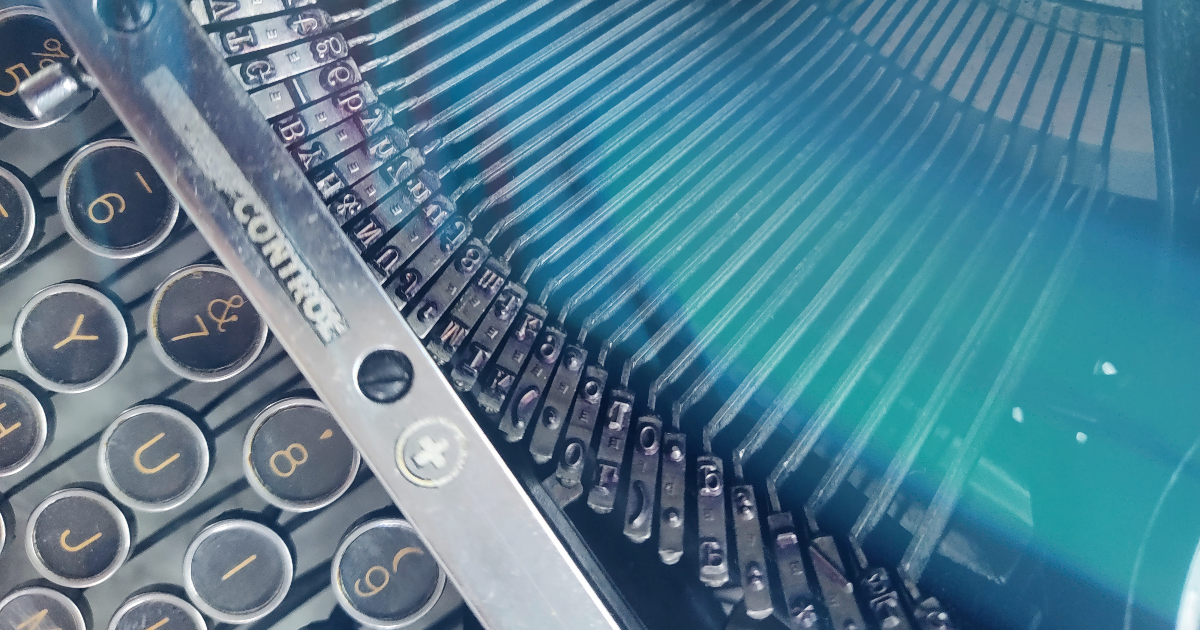
There it sat in a driveway on an old table. The price was marked $20 on a strip of masking tape. It was a 1980s summer, it was too hot, I was a kid, and we were visiting my cousins in the exotic land of Wisconsin. Their neighbors were having a yard sale (or garage/tag/estate sale, depending on where you’re from) and so of course we stopped by.
Lucky for me, my parents purchased that electric, yellow-beige Smith Corona typewriter (we also got an Atari game system, which was okay, but I couldn’t make anything with it). Once back at home, I’d wrangle it out of its dark brown hardshell case, plug it in, turn it on, and roll in a sheet of paper. The typewriter roared to life like a beast. As it warmed up, there was the slightest scent of toxic metal and plastic heating up (fumes slowly killing a few brain cells...) and punching the keys made a cacophony of clickey-clacks.
The writing began. Stories — lots of them — poured out of me — a reflection of whatever mysteries and fantasies I was reading — and made their way to life. Even the odd school book report came together on that machine.
Eventually, the Smith Corona died stopped working, and my family bought a word processor. This was similar to the typewriter but with the addition of a tiny digital screen had the astonishing capability to show 4 lines of text at once. Writing could be stored on removable disks. Though this machine was also exciting to plug in and use, it was far less visceral. Later on, we got a PC which offered even less of a sensory experience, but of course it also allowed for drawing with pixels.
A curious side effect of all this: I came into writer-hood using machines, and evolved creatively (and cognitively…) alongside those devices. This is, I suppose, an embodiment of writing and machines, which in turn reminds me of an Electronic Book Review article about digital media, handwriting gestures, and the “ethos of touch.”1
Powering up a device for writing became a sort of ritual. Using that typewriter meant total freedom, especially growing up in a large family with a small home. It was an escape into a world of my own ideas.
Today, together with a fresh cup of strong coffee, I prefer an older machines that simply ‘do less.’ This laptop beneath my fingertips today is not a ritual machine. It represents day-to-day work (like admin emails and grading) and the old iMac, once dependable, is no longer usable.
Though I handwrite often in my writing journal, the search for a different ritual machine has begun. Am I now dependent on a machine to write? Though a typewriter is tempting, I’m far too enticed by the copy-and-paste of moveable media.
Maybe the ritual machine is a separate laptop screen (also a gift to my neck and shoulders…). Maybe the ritual machine is an old laptop, or something else to facilitate like a brand new paper notebook or even an audio track. Maybe the ritual machine is something else entirely.
What’s your ritual machine (or tool) for writing and creative work?
See the article “At the Time of Writing: Digital Media, Gesture, and Handwriting” by Maria Angel and Anna Gibbs (2013) in Electronic Book Review, available at https://electronicbookreview.com/essay/at-the-time-of-writing-digital-media-gesture-and-handwriting/ ↩