Juggling Act: Finding Time for Writing
Identifying moments for daily writing and creating stuff can be a real thing. Really.
Writing is the only thing that when I do it, I don’t feel I should be doing something else. ― Gloria Steinem
This is the first semester in over a year that I’m not building a new course while also teaching that new course. Crazy times. Writing time, even as I write this, feels like a very precious thing.
During a hectic semester, it seems like there isn’t enough time or frankly, motivation, to accomplish much else. Those of us who teach or take care of (or work with) other people are also probably doing emotional labor, and that can affect how our days unfold, too.
But, what to do if you’ve got a project to do and there are not enough hours in the day? Panic. Don’t panic.
During a moment of relative calm, I started to examine ways to sneak writing sessions into my day. Everyone works differently, and there’s no one-size-fits-all approach to doing this. Part of figuring a writing day is knowing your energy patterns and capabilities.
Below is some advice I’ve imparted to our graduate students when they transition from regular coursework to thesis research, designing, and writing— while juggling other life things. Perhaps this is helpful for you, too.
- In the morning (5-10 minutes). Early in the day, note your intentions for the day and what needs to be accomplished. Do you need to write a certain number of words? Finishing a paragraph? Detail an outline? Take notes on literature? Mind map to make sense of a section?
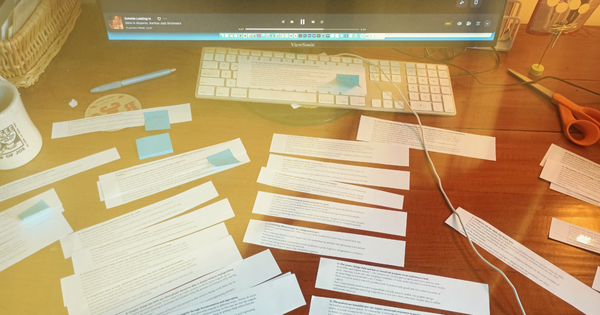
- Snack Writing (5-10 minutes). Throughout the day, find short breaks or moments when there are a few minutes to spare. These can be used for really quick writing sessions. You can jot down ideas, edit, or sketch something related to your project. Maybe it’s in a notebook, or maybe it’s digital. Maybe it’s a voice note on your phone. Bonus points if you eat a healthy snack while Snack Writing (your brain will love you for it).
- In-Between Writing (20-30 minutes). If you have a longer break or two during your day, dedicate it to a focused writing session. I used to call this lunch break writing but that didn’t make any sense (because lunch itself should be a real break from working) so I now think of it as the time situated between classes, meetings, or other life things. Set a timer and write as much as you can during this time; consider playing music (or rain sounds) to help you focus. Turn off notifications, unless they must remain on for things like family emergencies. Remember, the goal is to make progress, not to complete your entire project.
- In the evening (10-15 minutes). Somewhere near the end of your day, whether that is 5 pm or 1 am or somewhere in the middle, reflect on your morning intentions and what you accomplished during the day. If you didn’t get to all your goals, don’t beat yourself up — it’s just a signal to adjust expectations of yourself and what can reasonably be accomplished. We can’t do everything, even if we want to. Make quick notes to use in the morning when you organize your goals again; set yourself up for success the next day.
- Mega Block Writing (1-2 hours). Reserve extended blocks of time — on the weekends, on days with fewer commitments, or in the middle of the night (!?) — for deeper writing sessions. This is when you can dive into more complex writing bits and make significant progress. Think of this as a mini writing retreat and obviously, have brain food and beverages close at hand. And maybe, just maybe, you’ll experience what Mihaly Csikszentmihalyi calls ‘flow’.
- Weekly Review (15-30 minutes). At the end of the week, review your progress and adjust your goals for the next week. See #4 Evening Recap above about not beating yourself up. Celebrate your achievements and plan for the next week’s round.
These blocks of time might seem impossible to find. And, taking breaks is a must, and maybe you need to nap instead.
The duration and frequency of my writing sessions have changed over time, and I’m sure they will change again. I’m always amazed at how people craft their daily writing routines. Curious to hear how you all manage to write (or make things) alongside the other stuff.
Can an entire paper be written through Snack Writing? Will the elusive Mega Block Writing become a regular thing?
Gosh, I hope so. Thanks for reading all the way to the end, friend.